
FAQs
Quick answers for this category.
Singlemode fiber has a smaller core diameter (8-10 microns) that allows only one light mode to propagate, enabling transmission distances up to 100+ km with lower attenuation (typically 0.3-0.4 dB/km). It's ideal for long-haul telecommunications, campus backbone networks, and FTTH deployments. Multimode fiber has a larger core (50 or 62.5 microns) supporting multiple light modes simultaneously, suitable for shorter distances (300m-2km depending on OM rating) in data centers and building LANs. Singlemode uses laser light sources (1310nm/1550nm), while multimode typically uses lower-cost VCSELs (850nm/1300nm). Choose singlemode for distance and future bandwidth scalability; multimode for cost-effective short-reach applications.
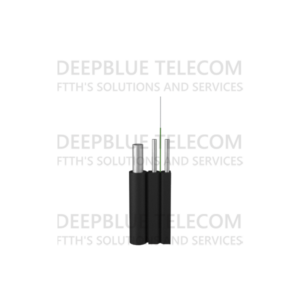
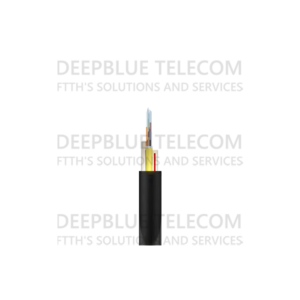
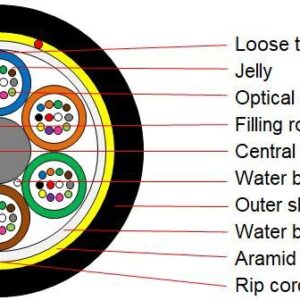
Loose tube fiber optic cables house multiple fibers in gel-filled tubes within the cable jacket—this design provides superior moisture protection and temperature stability, making it ideal for outdoor installations (aerial, buried, duct). The gel cushions fibers against mechanical stress and allows them to move freely during temperature fluctuations. Tight buffered cables have individual 900-micron protective coatings directly on each fiber, offering easier termination and better crush resistance for indoor environments like data centers, office buildings, and equipment rooms. Use loose tube for any outdoor application or inter-building runs; tight buffered for indoor horizontal cabling and patch cord assemblies.
Both options are available. Pre-terminated fiber optic cables come with factory-installed connectors (LC, SC, MTP/MPO) on one or both ends, eliminating field splicing and ensuring consistent optical performance. Field-spliced cables offer more flexibility for custom lengths and route changes but require trained technicians and splicing equipment. For large outdoor installations, we recommend trunk cables with field splicing to breakout cassettes. For indoor upgrades and equipment connections, pre-terminated assemblies reduce installation time by 60-70%.
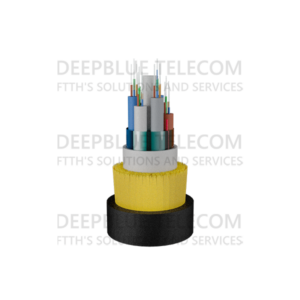
It varies significantly by cable type. A 12-fiber indoor tight buffered cable might handle 600N, while a 144-fiber armored outdoor cable could withstand 2700N+. The pulling tension depends on the cable's strength member design (aramid yarn, steel wire, or FRP rods), fiber count, and jacket construction. Contact us with your specific cable model or application requirements, and we'll provide the exact rated pulling tension and installation guidelines.
Yes. While we stock standard configurations (2, 4, 6, 12, 24, 48, 96, 144 fibers), we manufacture custom fiber counts for large projects—minimum order quantities apply (typically 5-10 km for specialized counts). For projects requiring multiple custom specifications (fiber count, jacket color, armor type), request a quotation with your detailed requirements.