




FAQs
Quick answers for this category.
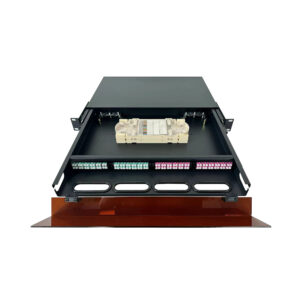
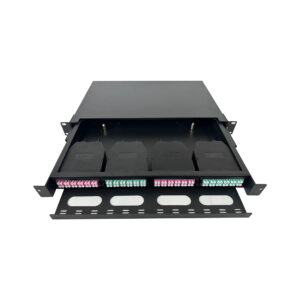
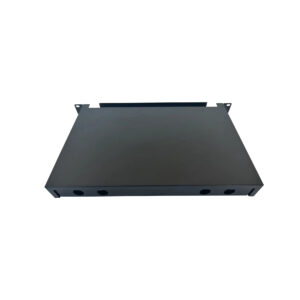
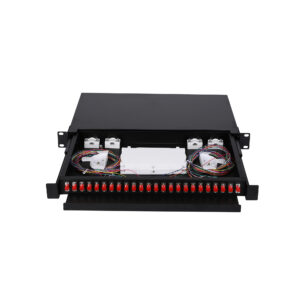
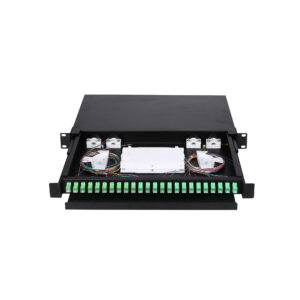
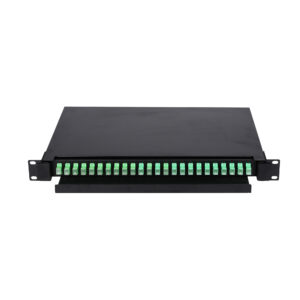
ODF and fiber patch panel essentially refer to the same type of equipment—both provide centralized fiber termination, adapter mounting, and cross-connection capabilities. "ODF" is predominantly used in telecommunications and service provider networks, while "fiber patch panel" is more common in data center and enterprise IT environments. Both can range from simple wall-mount adapter plates to complex rack-mount systems with integrated splice trays and cable management.or fiber termination, splicing, and cross-connection.
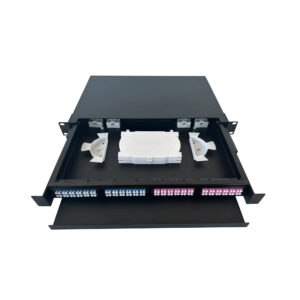
We provide both options. Pre-loaded ODFs come with adapter panels, splice trays, and cable management pre-installed—ideal for quick deployment. Empty chassis allow you to select specific adapter types (LC, SC, MPO), port counts, and accessories based on your exact requirements. Many customers order empty frames initially and add modules as their network grows, which reduces upfront cost and provides maximum flexibility.
It depends on your port density and splice capacity needs:
1U (24-48 ports): Suitable for small equipment rooms or single equipment rack connections
2U (48-96 ports): Most common for enterprise data centers with moderate fiber counts
4U (96-144+ ports): High-density deployments or when you need extra splice tray capacity (12+ trays)
If rack space is limited, choose higher-density LC-based ODFs. If ease of handling matters more, SC-based 2U/4U frames are easier to patch and maintain.
Yes. Our modular ODF systems support mixed adapter configurations—for example, you can install LC panels for equipment connections on top rows, SC/APC panels for OSP trunk terminations in middle rows, and reserve bottom slots for future MPO/MTP cassette upgrades. Each cassette or panel module is independently replaceable without affecting adjacent circuits. Just ensure your chassis has compatible mounting slots.
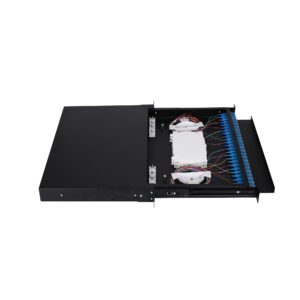
Yes. Our ODF models include slide-out splice tray assemblies that allow technicians to access fusion splices without removing cables or disrupting front-panel patching. This feature is essential for data centers requiring frequent adds/moves/changes.