

FAQs
Quick answers for this category.
A PLC splitter uses semiconductor fabrication techniques to create waveguides on a silica substrate, delivering uniform splitting ratios, consistent performance across all wavelengths, and support for high split counts (up to 1x64). FBT splitters are made by fusing and tapering optical fibers, making them cost-effective for lower split ratios (1x2 to 1x8) but with higher wavelength sensitivity and less uniform power distribution. For GPON/EPON deployments requiring 1x32 or 1x64 splits, PLC fiber optic splitters are the industry standard.
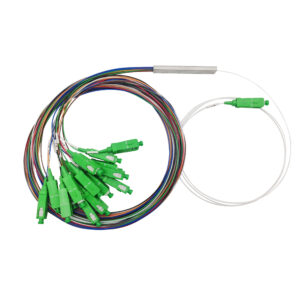
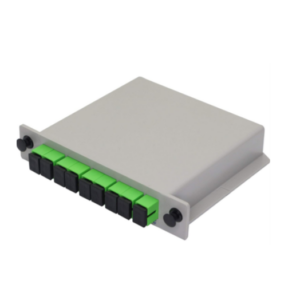
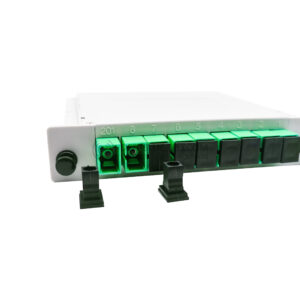
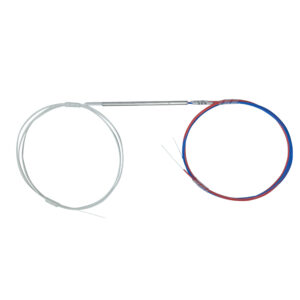
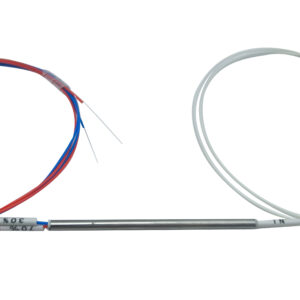
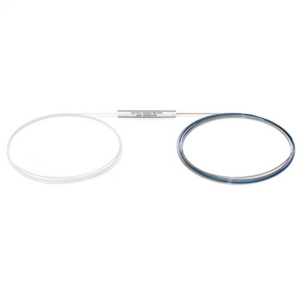
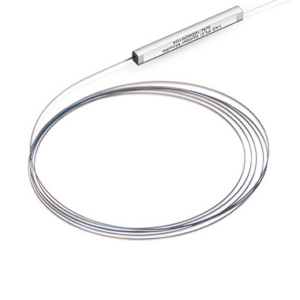
Cassette PLC splitters come pre-terminated in LGX, ABS, or steel enclosures with connectorized pigtails, enabling plug-and-play installation in ODF chassis and fiber distribution hubs. Bare fiber PLC splitters have unterminated fiber legs, ideal for fusion splicing in outdoor closure boxes, street cabinets, or custom assemblies. For rapid ODN deployment with minimal field splicing, cassette modules reduce installation time and ensure consistent quality.
The choice between 1x32 PLC splitter and 1x64 PLC splitter depends on your PON architecture, link budget, and subscriber density. A 1x32 split provides higher optical power per subscriber (better for longer reach or lower-power OLT), while 1x64 maximizes port utilization and reduces total splitter count in high-density areas. Many operators deploy 1x32 for initial coverage and reserve 1x64 for mature markets where fiber availability is constrained.
Insertion loss in PLC splitters follows a logarithmic relationship with split ratio. A 1x2 PLC splitter typically has ~3.5 dB loss, 1x8 ~10.5 dB, 1x16 ~14 dB, 1x32 ~17.5 dB, and 1x64 ~21 dB (including connector loss). When designing PON link budgets, account for splitter loss, fiber attenuation, connector pairs, and system margin to ensure adequate receiver sensitivity at the ONT.
Yes. PLC splitters are wavelength-independent passive devices, making them compatible with GPON (1490/1310 nm), XGS-PON (1577/1270 nm), EPON, 10G-EPON, and NG-PON2 systems. Their flat wavelength response across 1260–1650 nm ensures that a single optical PLC splitter infrastructure can support multiple PON generations without hardware replacement, protecting your capital investment during technology migration.