Indoor vs. Outdoor Fiber Cable: Differences and How to Choose
Indoor and outdoor fiber cable differ in construction, jacket, and protection. Indoor cable is tight-buffered and fire-rated for use inside buildings. Outdoor cable is loose-tube, water-blocked, and UV-resistant for use in ducts, on poles, or underground. Choose by pathway first, fire rating second, and fiber count third. Where one run crosses a building wall, indoor/outdoor (dual-rated) cable avoids a transition splice.
This guide covers the differences, the cable types, the entrance-point rule, and a step-by-step selection process.
Quick Summary
- Indoor cable: tight-buffered, flexible, and fire-rated (OFNP, OFNR, or LSZH). It is not built for sunlight or moisture.
- Outdoor cable: loose-tube with water blocking and a UV-stabilized PE jacket. It handles temperature swings, tension, and crush loads.
- Indoor/outdoor cable: combines a fire rating with weather protection for runs that cross a building wall.
- Selection order: pathway, then fire rating, then fiber type and count.
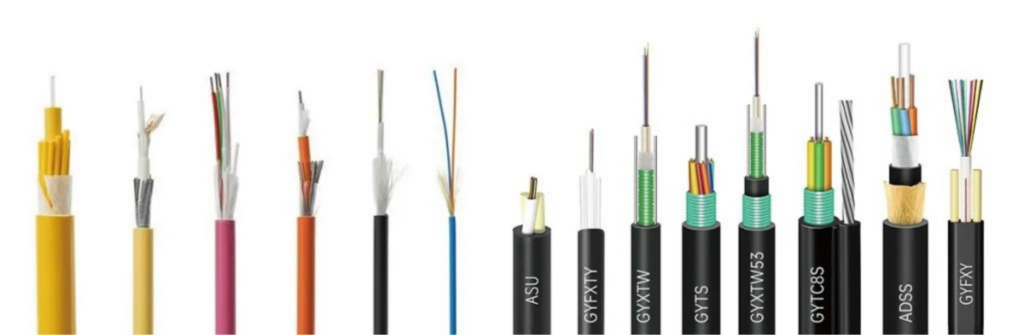
What Is the Difference Between Indoor and Outdoor Fiber Optic Cables?
Indoor cable is designed for fire performance and flexibility. Outdoor cable is designed for environmental and mechanical protection. The glass fiber inside can be identical. The structure, jacket, and water protection around the fiber are what differ.
Construction: Tight-Buffer vs. Loose-Tube
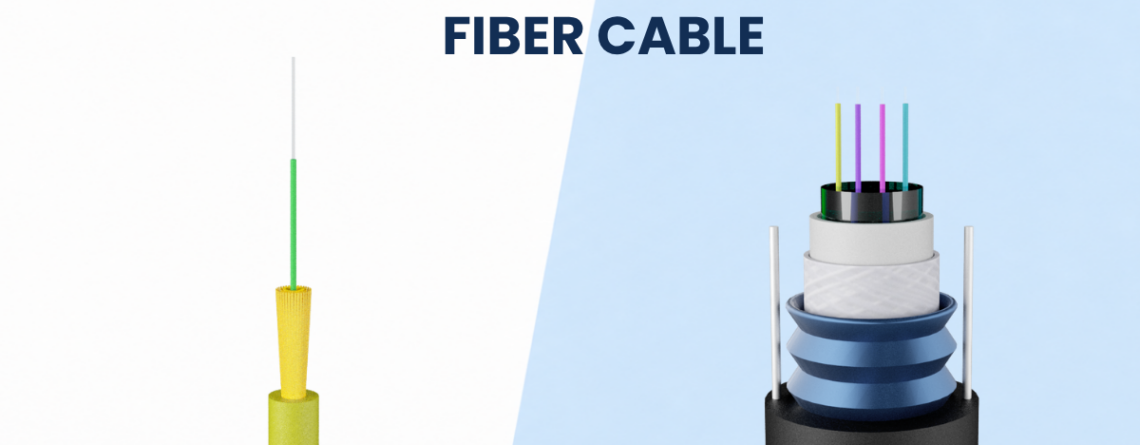
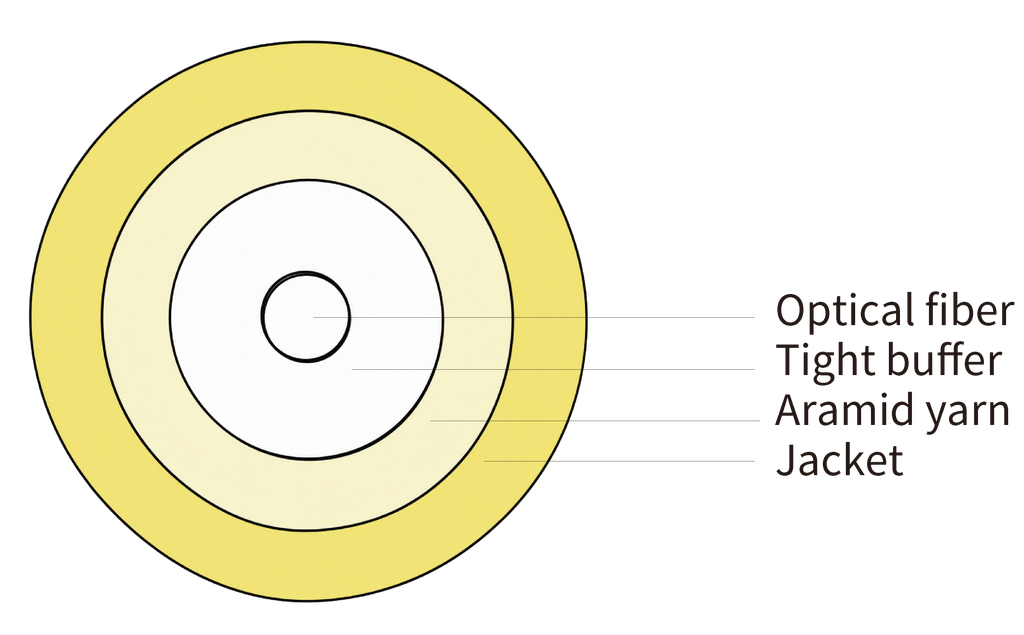
Indoor cable usually uses tight-buffer construction. A thermoplastic layer, typically 900 µm in diameter, coats each fiber directly. Corning’s indoor distribution cable specification lists this 900 ± 50 µm buffer. The design makes connectors easy to install and keeps the cable small.
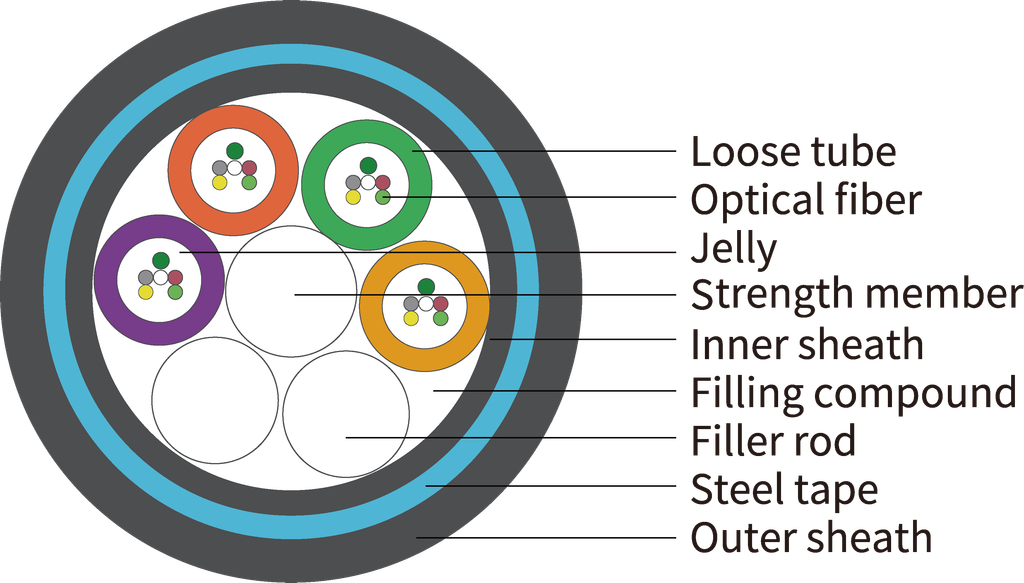
Outdoor cable usually uses loose-tube construction. Fibers sit freely inside a rigid buffer tube. When the cable expands or contracts with temperature, the fibers do not take on that stress. The tube also leaves room for gel or dry water-blocking material.
Jacket Materials and Fire Ratings
Indoor jackets are chosen for fire performance, and outdoor jackets are chosen for weather resistance.
- Indoor: PVC, LSZH, or low-smoke plenum compounds. Common ratings are OFNP (plenum), OFNR (riser), and LSZH where low smoke and no halogens are required.
- Outdoor: UV-stabilized black polyethylene (PE). It resists sunlight, moisture, and abrasion, but it is not fire-listed for most indoor spaces.
Water, UV, and Temperature Protection
Outdoor cable must stop water from traveling along the cable. Gel-filled tubes work but need cleaning before splicing. Dry water-blocking tapes and yarns are cleaner to terminate. Indoor cable normally has no such protection.
Indoor vs. Outdoor Fiber Cable Comparison Table
| Feature | Indoor Cable | Outdoor Cable |
|---|---|---|
| Typical construction | Tight-buffer | Loose-tube |
| Typical jacket | PVC or LSZH | PE |
| Fire rating | OFNP, OFNR, OFNG | Usually none |
| Water blocking | Rarely | Gel or dry water-blocking |
| UV resistance | Low | High |
| Tensile strength | Lower | Higher |
| Fiber count | Usually 2–48 | Up to 288 or more |
| Best for | Risers, plenums, racks, wall runs | Ducts, aerial, direct burial, campus links |
What Types of Indoor and Outdoor Fiber Optic Cable Are Available?
Types of indoor and outdoor fiber optic cable are grouped by pathway. Each pathway has a matching construction.
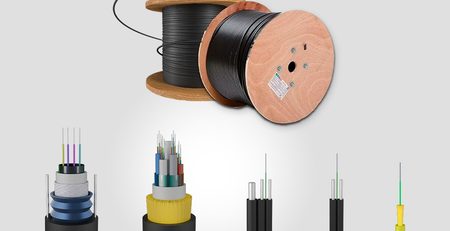
Indoor Cable Types:
- Simplex/duplex cable: one or two fibers for patch cords and equipment links.
- Distribution cable: several tight-buffered fibers under one jacket for backbone and horizontal runs.
- Breakout cable: each fiber has its own jacket, which suits rougher handling.
- Plenum and riser cable: fire-rated versions of the cables above.
Outdoor Cable Types:
- All-dielectric loose-tube cable: non-metallic, for duct and aerial use. No grounding is needed.
- Armored loose-tube cable: corrugated steel tape protects direct-burial runs. Giving rodent protection.
- Self-supporting aerial cable (ADSS or figure-8): hangs between poles.
Indoor/outdoor cable combines a fire-rated jacket with water blocking and UV resistance. Our indoor outdoor fiber optic cable range covers this category.
Indoor/Outdoor (Dual-Rated) Cable
Indoor/outdoor cable combines a fire-rated jacket with water blocking and UV resistance. One cable can therefore cross a building wall without a transition splice. General-purpose indoor/outdoor fiber optic cable of this kind suits campus links, building entrances, and mixed routes.
How to Choose the Right Fiber Cable for Your project?
Choose by pathway first, fire rating second, and fiber count third. The steps and tables below turn that rule into a purchasing decision.
Step-by-Step Decision Framework
Step 1: Map the route. Mark every section as indoor, outdoor, or crossing. Include risers, plenums, ducts, and poles.
Step 2: Check the entrance distance. If outdoor cable would run more than 50 ft (15 m) inside, plan a transition splice or dual-rated cable.
Step 3: Pick the fire rating. Plenum spaces need OFNP. Vertical shafts need OFNR at minimum. Hospitals, tunnels, and airports often prefer LSZH.
Step 4: Pick the outdoor protection. Use the pathway table below.
Step 5: Match fiber type and count. Use single-mode for long links and multimode for short in-building links. Add spare fibers for growth.
Which Outdoor Cable Fits Each Pathway?
Loose-tube cable with a PE jacket and water blocking is the best general choice outdoors. The best subtype depends on the pathway:
| Outdoor Pathway | Recommended Cable |
|---|---|
| Underground duct | All-dielectric loose-tube |
| Direct burial | Armored loose-tube |
| Pole-to-pole | ADSS or figure-8 aerial |
| Short building entry | Indoor/outdoor dual-rated |
Decision Table
| Situation | Best Choice |
|---|---|
| Entire run inside, in air-handling space | Indoor plenum (OFNP) |
| Entire run inside, between floors | Indoor riser (OFNR) |
| Between buildings in conduit | Outdoor all-dielectric loose-tube |
| Buried without conduit | Armored outdoor cable |
| Outside to inside in one run | Indoor/outdoor dual-rated |
| Temporary outdoor use | Indoor/outdoor, protected in conduit |
Which Specifications Should You Check Before Ordering?
Every datasheet for indoor outdoor fiber optic cable specifications should list the following items:
- Fiber type: OS2 single-mode, or OM3/OM4/OM5 multimode.
- Fiber count: a 12 fiber indoor outdoor fiber optic cable suits many building links and FTTH feeders. Larger campuses may need 24 to 144 fibers.
- Attenuation: compare cabled values at the working wavelengths.
- Tensile load and crush resistance: match both to the pull length and pathway.
- Bend radius: spec lists cable diameter without tension and under tension
- Temperature range: check both installation and operating ranges.
FAQ
Which type of fiber cable is best for outdoor use?
Loose-tube cable with a PE jacket and water blocking is best for outdoor use. Duct routes suit all-dielectric cable, direct-burial routes suit armored cable, and pole routes suit ADSS or figure-8 cable. Match the cable to the pathway.
Can I use indoor cable outside?
Standard indoor cable should not be used outside. Its jacket lacks UV protection and its core lacks water blocking, so sunlight and moisture cause early failure. When a short outdoor section is unavoidable, use indoor/outdoor-rated cable, preferably inside conduit.
Can outdoor fiber cable be used indoors?
Unlisted outdoor cable may enter a building for up to 50 ft (15 m) under NEC 770.48(A) and must end in an enclosure. Beyond that distance, the run must transition to listed indoor cable. Listed indoor/outdoor cable can run farther, within its plenum or riser rating.
Is indoor/outdoor cable worth the extra cost?
Indoor/outdoor cable often costs more per meter, but a run that crosses a wall needs no splice closure, no transition labor, and no extra failure point. Fully indoor or fully outdoor routes usually need only a dedicated cable.
How many fibers does an indoor/outdoor cable need?
A 12-fiber indoor/outdoor cable suits many building links and FTTH feeders. Campus backbones may need 24 to 144 fibers. Plan spare fibers for growth, because adding fibers later usually means pulling new cable.
Conclusion and CTA
Indoor vs. outdoor fiber cable comes down to the pathway. Use indoor cable for fire-rated spaces and outdoor loose-tube cable for ducts, burial, and poles. Where a run crosses a building wall, either splice at the entrance or use indoor/outdoor cable.
Check the pathway, fire rating, fiber count, and data sheet values before you order.
Not sure which cable fits your route? Send us your route length, pathway, and fiber count. Deepblue Telecom will recommend the right fiber optic cable type, quote bulk reels or custom lengths, and provide datasheets and test reports.